
Introduction:
One of the best departments of science is physics. It describes the movement of objects, the actions of forces, the movement of light and the transformation of energy. However, students may have difficulties remembering all the formulas and constants. That is why a Physics Reference Table is one of the indispensable study tools. It keeps all the major equations, physical constants and unit conversions at one location. This helps the students to review and implement concepts easily in a short time in cases where they do not need to leaf through several pages.
What Is a Physics Reference Table?
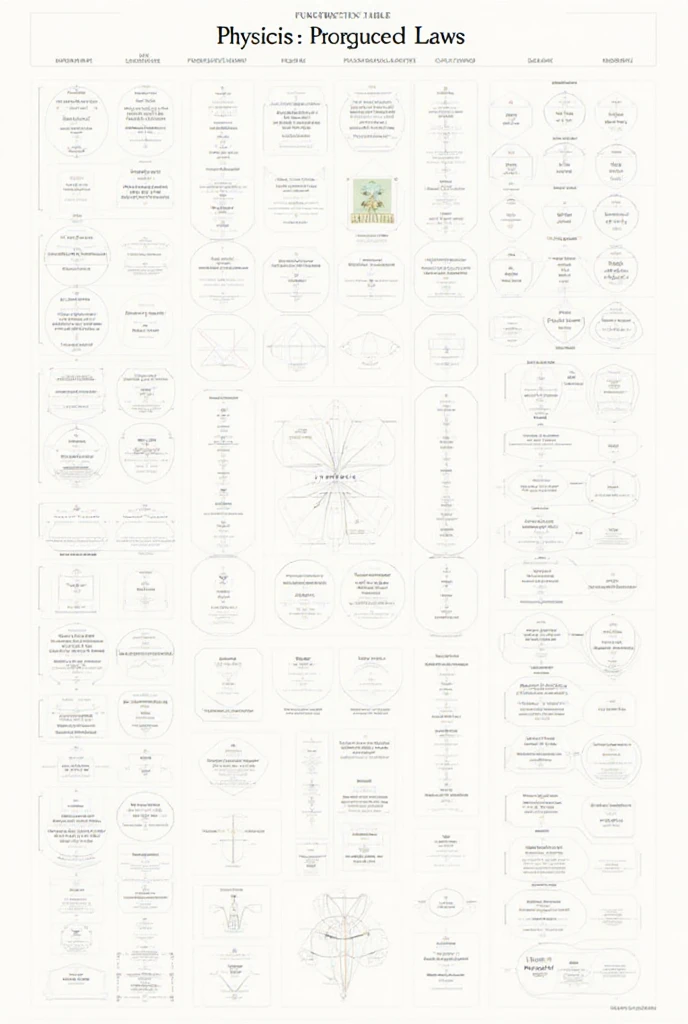
Physics reference table A physics reference table is a concise listing of significant physics formulas quantities and constants applicable in the solution of problems. It assists students in remembering definitions, relations and laws immediately. As an example such formulas as F = m x a, V = I x R, and E = mc2 may be located on one page. It is a table that one can find in an exam or lab in order to determine the correct formula in a short time. It is as though it is a cheat sheet only to study and precision not to get around.
Physics Learning Physics Importance of a Physics Reference Table.
APhysics Reference Table is not just another thing that is to be memorized. It reinforces the knowledge and aids in picturing the relationships between various topics in physics. It also builds confidence as when a student is certain where he or she can get the right formula he/she is able to solve problems more easily. It is an expedited revision tool to save hours in the process of exam preparation. Another good habit is to be able to keep your own table and then you have more chances of remembering formulas by rote.
Primary Sub-sections of a physics reference table.
A properly structured Physics Reference Table is broken down into a number of subsections:
Mechanics: Propositions of movement energy and force. Notable equations are, F = m x a, w = f x d and KE = 1/2mv2. These assist in knowing the manner in which forces produce motion and in knowing energy varying.
Waves and Sound: Is concerned in the vibration and frequency with the formula v = f x l and f = 1 / T. These are the reasons behind the movement of sound and light waves.
Electricity: Contains such fundamental laws as V = I x R (Ohm law), P = V x I and Q = I x t. They characterize the relations between voltage, current and resistance.
Magnetism: For the properties of interaction between magnetic fields and electric currents it carries such formulae as F = B x I x L x sinth.
Light and Optics: Discusses the behavior of light in terms of n c / v which is the refractive index of materials.
Constants and Conversions: Lists such constants as the Speed of Light (3.0 x 10⁸ m/s), Gravitational Constant (6.67 x 10⁻¹¹ Nm2/kg2), and Planck Constant (6.63 x 10⁻³⁴ Js). It also has temperature conversion equations such as K=degC +273.
The Important Formulas and Constants.
Each student must be made aware that formulae in physics are not arbitrary they are relationships that characterize behavior in the real world. As an example we can consider Newton’s Second Law ( F = m x a), which explains that the force is actually proportional to mass and acceleration. On the same note, Ohm Law ( V = I x R) describes the relationship between voltage, current and resistance in an electric circuit. Modern physics involves constants such as Planck’s constant and speed of light. These equations and numbers form the basis of the study of more professional subjects such as energy conservation, electromagnetism and quantum mechanics.
The Reason Every Student needs a Reference Table.
It is the Physics Reference Table that is beneficial to every physics learner at school or in college. It makes things clear, makes the solving of problems faster and assists in connecting theory with practice. Students are not required to memorize hundreds of different formulas but they can learn them together and see the connections with each other. Having a table close by when studying can also enhance memory when taking tests. It is among the cleverest traditions of a person who is keen on perfecting physics.
Bonus Tip: How To Build Your Own Physics Reference Table.
You can make physics still easier as well by writing your own reference table. Begin with the list of the formulas you have the most difficult time memorizing and keep writing down new ones as you learn various subjects. Daily section them into parts such as Mechanics Electricity Magnetism and Optics. Make it more visual with the help of colors symbols and diagrams. Continue updating it on completion of each chapter. This personal version will not only serve to memorize at a faster rate but will also provide you with a profound knowledge about everything related to physics.