
Introduction:
Electrostatic tools are important in determining how electric charges work and interact in physics. They allow scientists, engineers, and students to study the forces between charged objects, recognize the presence of electric charges, and experimentally demonstrate electrostatic phenomena. From the basic gold-leaf electroscope to detect electric charge to highly complex devices such as the Van de Graaff generator that can produce very high voltage, electrostatic tools allow electric forces to be both visible and measurable.
This article will cover the theory, functioning, and practical use of the most commonly used electrostatic instruments with the goal of aiding your understanding of how static electricity is an integral part of many of the technologies we use regularly.
What Are Electrostatic Tools?
Definition of Electrostatic Tools:
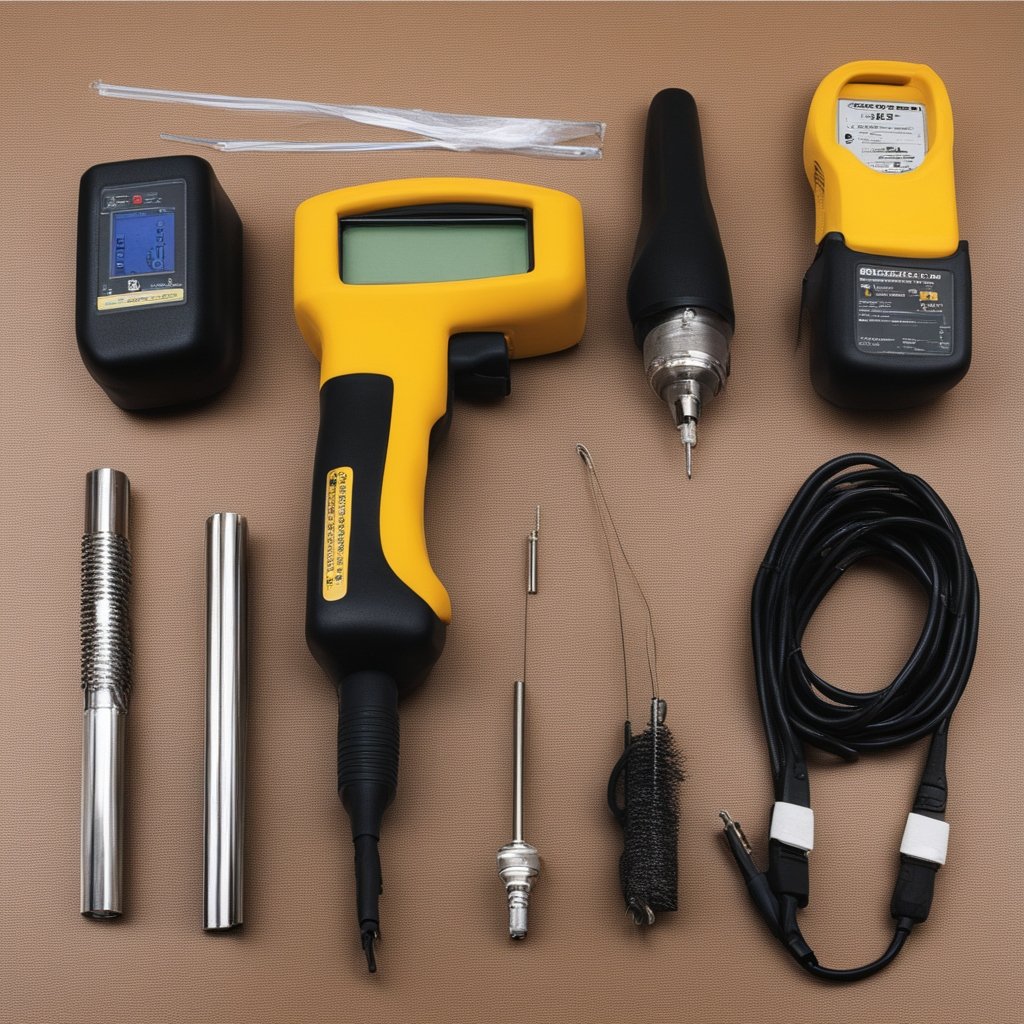
Electrostatic tools are scientific tools designed to utilize the principle of electrostatic, the study of electric charges at rest. These tools can also be utilized for the purpose of measuring and controlling the charge of various materials. The tools can come in the form of something as simple as an electroscope to something as complex as an electrostatic precipitator. All these tools can help scientists and engineers understand how charges behave and interact. There are many uses for electrostatic tools in the field of physics, industry, and pollution control — so they are useful and important in research as well as everyday life.
Importance of Electrostatics in Physics:
Electrostatics is an important field of study in physics because it involves the interaction of electric charge without motion. The study of electrostatics leads to many significant technologies and scientific principles used in everyday life. In electrostatics, we discuss concepts such as electric fields, potential difference, and the forces that are present on charged objects, all of which are necessary concepts to understand. Electrostatics is relevant to our life, observed in everyday items that we use in our home, such as photocopiers, air purifiers, and touch screens that all depend on principles of electrostatics. Overall, electrostatics is related to understanding different aspects of nature, such as lightning and static electricity is an important and relevant field as it is relied upon for various scientific and industrial applications.
Principle of Electrostatic Tools
Electrostatic devices operate according to basic principles of electrostatics: applied physics explains behavior of stationary electric charge. The principles state that like charges repel, and unlike charges attract. An object becomes charged electrically when it gains or loses electrons, and through this process an electric field, will exist surrounding it. The electrostatic devices allow us to simply study and visualize such charges and their measurement, and this is paramount when considering many other physical and technical phenomena of stationary electric charge events. Electric static instruments are devices that measure, detect or otherwise use those electric fields to inform us of the behavior of charges. For instance, if an electroscope is charged, the two leaves of the electroscope will move apart because there is repulsion between the like charges present, that is, they are charged in that they repel one another, which is why they diverge. This is a somewhat simple demonstration, but this is the principle of operation for many of the electrostatic instruments that can be experienced in laboratories, industry and research in science.
Basic Concept of Electric Charges:
Matter’s ability to attract or repel other matter is known as electric charge. There are two kinds of charges, positive and negative. Opposite charges attract one another while like charges repel one another.
Laws of Electrostatics (Coulomb’s Law, Electrostatic Induction)
Coulomb’s Law states that the force acting on two point charges is directly proportional to the magnitudes of the charges and inversely proportional to the squared distance between the two charges. Electrostatic induction is the process of bringing a charged body close to an item and causing charge separation without actually contacting the charge.
Role of Conductors and Insulators in Electrostatic Devices
Conductors enable free movement of electric charges through their structure, facilitating transfer and detection of charge in electrostatic devices such as electroscopes. Insulators prevent flow of charges so that the charges do not dissipate and the device works correctly.
Common Electrostatic Tools Used in Physics
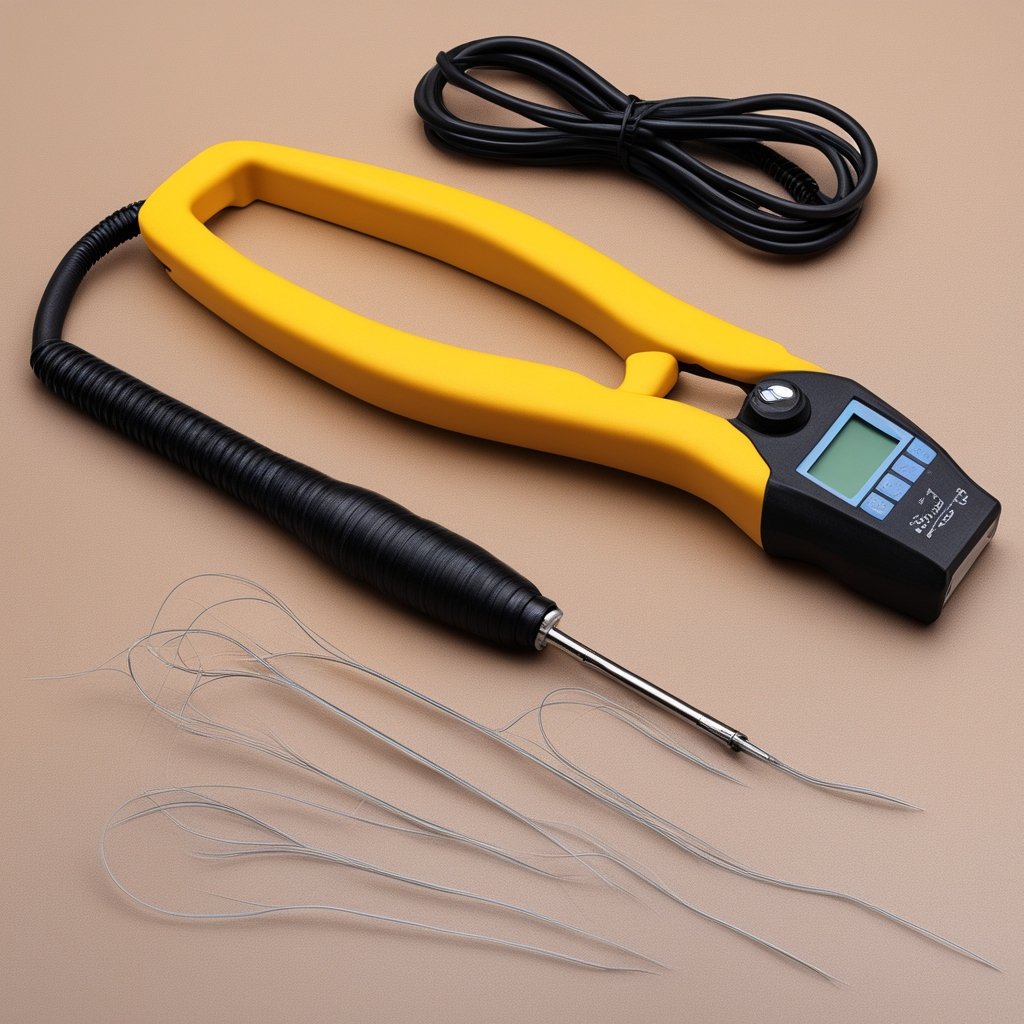
Some cosmopolitan and often used tools to study electrostatics are the electroscope (used for detecting electric charge), the gold-leaf electroscope (used for measuring the strength of a charge), the electrometer (used for measuring the charge accurately), and the Van de Graaff generator (used for producing high voltages). These tools can all help study the behavior of electric charges and their effects in the setting of physical experiments.
Gold Leaf Electroscope – Structure and Operation
The gold leaf electroscope utilizes two thin, gold leaves enclosed in a glass container to detect electric charges. Once a charged object touches the metal cap of the electroscope, the two leaves will repel, indicating both the existence of a charge, and whether it is positive or negative.
Van de Graaff Generator – Principles and Applications
A Van de Graaff generator operates on the principle of charge accumulation through a moving belt. It generates high voltage for the study of electric fields and for accelerating particles in many physics laboratories.
Faraday Cage – Shielding and Protection from Electric Fields
A Faraday cage is a metal container that prevents electric fields from entering from the outside. It shields people and equipment from electric shocks and electromagnetic interference.
Electrophorus and How It Works
An electrophorus is a device used to demonstrate the generation of static electricity using the principle of induction. It consists of a metal plate and a base made with an insulating material. This device can be used to transfer charge in a safe way.
Pith Ball Electroscope
The electrostatic force between the charges causes the tiny hanging ball to either attract or repel a charged object when it is brought close to a pith ball electroscope.
Working of electrostatics tools
Electric Charge Detection and Measurement
Electric charge is detected and measured by electrostatic devices like electrometers and electroscopes. By displaying charged readings or attracting or rejecting other charged items, they are used to ascertain whether an object is charged, what kind of charge is there, and how much charge is present.
Storage and Transfer of Static Electricity
Static charges may be stored and transferred by electrical devices such as capacitors and electrophorus. They display the controlled use of electrostatic energy and can store charges by friction or induction, and release it when needed.
Displaying Electric Force
Electric force between charged objects may be displayed using electrostatic devices. For example, a Van de Graaff generator or pith ball electroscope displays how the electric field produced around charged objects creates attraction or repulsion.
Real-Life Applications of Electrostatics
Air Purifiers: Electrostatic Precipitators
By charging particles that stick to oppositely charged plates, they remove smoke and dust and help to clean air in industrial applications and environmental pollution control systems.
Laser Print and Copying
These instruments easily produce sharp printed text and images by transferring toner to paper by electrostatic attraction, and applying heat to by fusing it to the paper.
Powder Coating and Spray Painting
Particles of charged paint or powder are drawn to surfaces that are oppositely charged, producing a uniform, smooth application with little paint loss.
Natural Lightning and Static Electricity
Lightning is a natural example of static electricity and occurs when the electric charges in clouds immediately discharge and create dazzling flashes of light and thunder.
Conclusion:
In this content to learn about the behavior and interaction of electric charges, as well as their effects on materials, it is important to utilize electrostatic devices. Such devices help to connect theoretical physics with modern technology, making static electricity measurable and practical for uses ranging from detecting small charges to practical applications such as air purifiers and printers.

